New Orleans offers jazz, food and festive chaos, but the city also holds one of America’s historical treasures: the National WWII Museum. The National WWII Museum is the most visited attraction in the city. The museum often appears among the best museums in the world. You won’t just see a collection of artifacts; it is a living tribute to the war that shaped the world. The museum tells the story through exhibits, stories and huge scale. Whether you are a history buff, a family member or simply a traveler looking for something other than Bourbon Street, the museum gives a feeling that stays with you after you walk out.
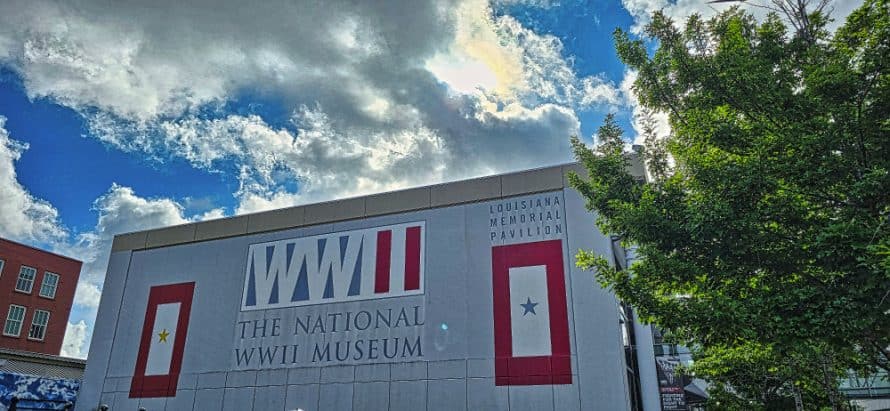
I have been to a lot of military museums all throughout the world, including the WWI Museum in Kansas City and The National WWII museum is different than most I have been to. A lot of the museums I have visited have a bunch of artifacts along with a lot of equipment such as artillery, armored vehicles, planes and such as well as a lot of weaponry and other things. The WW2 museum has those things but mostly has smaller artifacts that tell the story and timeline of events that occurred in WWII in both the European and Pacific theaters of war. It does a really good job of explaining what led up to the war, the timeline of events and the post war era. It also concentrates on the stories of those that fought through memoirs, diaries, first person accounts and biographies of those that served.
The museum is big. It sits on seven acres and has seven separate pavilions. The museum shows why World War II was fought, how World War II was won and what World War II means today. I walked through the museum. In this guide we will cover everything you need: the museum’s history, a building‑by‑building breakdown, the way to tackle the museum and dive into the three most interesting exhibits. The best times to visit the museum and tips to make your trip memorable. While I had limited time and did a whirlwind tour in half a day I recommend you plan, for a day or two. The museum needs that time.
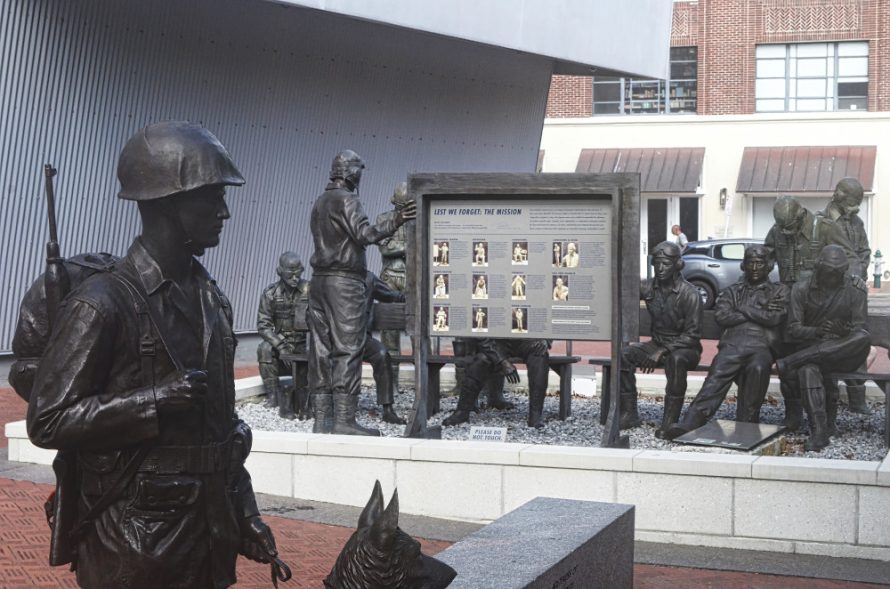
The National WWII Museum began with an idea. The idea was to honor the Americans who fought on D-Day and to preserve the Americans stories before the stories were lost forever. Historian Dr. Stephen E. Ambrose, author of Band of Brothers and D‑Day: June 6 1944 and Dr. Gordon H. “Nick” Mueller began the project in the 1990s. Dr. Stephen E. Ambrose was then a professor, at the University of New Orleans. Ambrose interviewed hundreds of veterans. Saw that their stories were fading. Dr. Stephen E. Ambrose wanted a place to honor the Normandy invasion, the turning point of the theater. Dr. Gordon H. “Nick” Mueller worked with Ambrose to turn that idea into a museum.
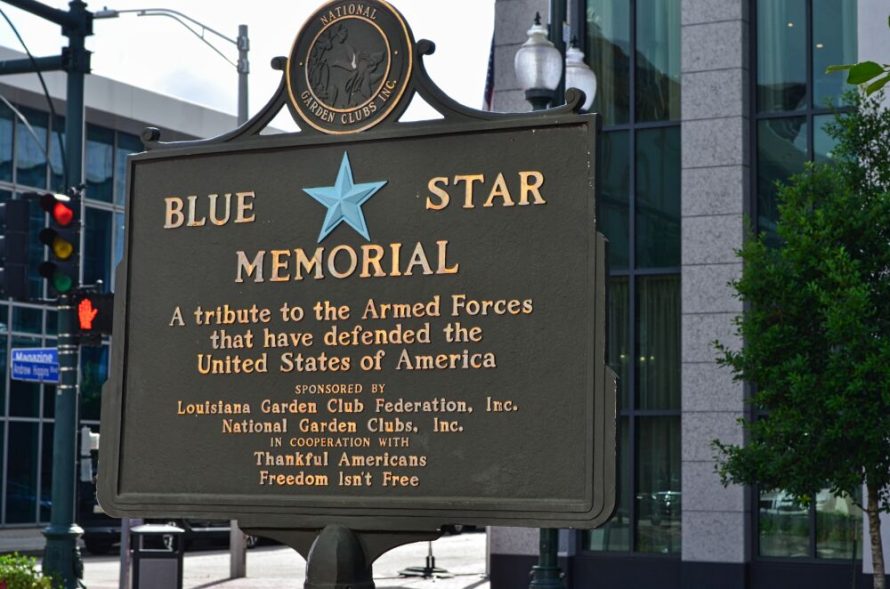
Why New Orleans? I have always asked that question. The answer is the entrepreneur Andrew Higgins and the Higgins boats. Workers built the LCVP (Landing Craft, Vehicle, Personnel) here, in the Crescent City. The LCVP let the Allied troops storm beaches from Normandy to Iwo Jima. General Dwight D. Eisenhower said, “Andrew Higgins is the man who won the war for us.” New Orleans produced thousands of Higgins boats. You may not recognize the name but you have probably seen the boat in a lot of movies. It’s the boat you see arriving at the beach with the ramp dropping down in the front and soldiers running off straight toward the enemy. And as terrifying as that was and many didn’t make it very far out of the boats, it was the best way at the time to get thousands of troops onto an island in the Pacific or a beach head in Europe. New Orleans made the home, for the National D-Day Museum when the National D-Day Museum started. I think the story shows why New Orleans matters.
Hotels and Attractions in New Orleans
The museum opened its doors on June 6, 2000. That day was 56 years, after D-Day. The museum chose the Louisiana Memorial Pavilion as the cornerstone. The first exhibits focused on the Normandy landings and displayed a Higgins boat. Three years later in 2003 Congress named the museum “Americas National WWII Museum ” because the museum had grown beyond a day. In 2004 the museum joined the Smithsonian Institution. Today the museum holds artifacts, thousands of histories and the museum draws visitors from all 50 states and dozens of countries.
The Museum Campus: Seven Buildings and What Each Holds
The campus covers seven acres and has seven pavilions that connect to each other. The campus is held together by the Bollinger Canopy of Peace. The Bollinger Canopy of Peace is a steel frame that stands for the nation’s fight against tyranny. I recommend you download the campus map before you go. The map shows a layout that’s easy to follow. They also have brochures at the museum that show where everything is. Even with all that I had to stop and ask a couple of volunteers which way to go a couple of times. They have volunteers stationed around the museum to help guide you around, and answer questions.
Here is what each building offers:
Louisiana Memorial Pavilion
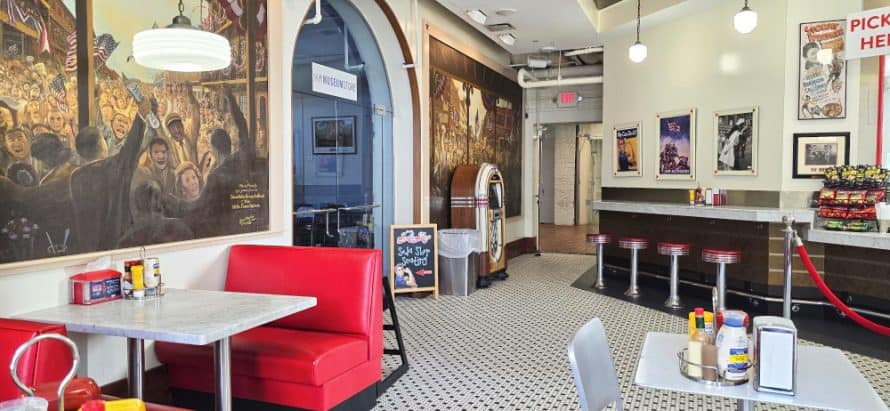
The original building and main entrance. Pick up tickets here, grab a “Dog Tag Experience” (highly recommended—scan it throughout for personalized veteran stories), and start with the Arsenal of Democracy exhibit on the 2nd floor of the pavilion has the Herman and George Brown Salute to The Home Front which outlines the explains the events that led to war. On the 3rd floor of tha pavilion is the original D-Day displays, Higgins boats, the L.W. “Pete” Kent Train Car Experience (step inside a restored boxcar used to transport troops), and rotating special exhibits. The Malcolm S. Forbes Rare Artifacts Gallery displays a lot of interesting things like Eisenhower’s jacket. There is also a soda shop at one end of the building that opens up for breakfast, so you can grab a cup of coffee before you check everything out.
Solomon Victory Theater
The home of the 4D experience Beyond All Boundaries (produced by Tom Hanks). The 4D cinematic experience brings to life America’s WWII story through the words of those who experienced it and is shown hourly. The Solomon Victory Theater is the spot where many visitors start or end their day. There is also BB’s Stage Door Canteen, the US Merchant Marine Gallery, and The American Sector Restaurant & Bar.
Campaigns of Courage Pavilion
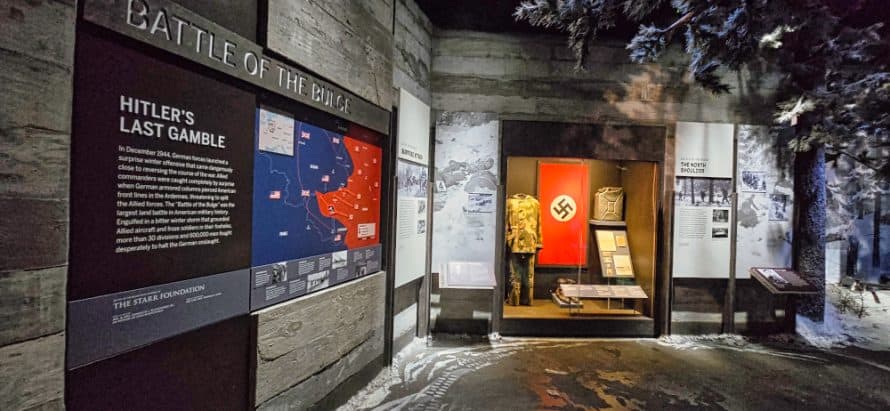
This is the heart of the museum and covers 19,000 sq feet. The big building holds the two exhibits: Road, to Tokyo (Pacific) and Road, to Berlin (European Theater). The Road to Tokyo take you on an immersive journey from Pearl Harbor, thru the island of the Pacific and on to Tokyo. Visitors are surrounded by the look and feel with atmosphere designed to show the terrain, the walls have flat screens displayed playing actual film and news reels of the war in various battles and there are the stories of the men and women told in their words of what they endured.
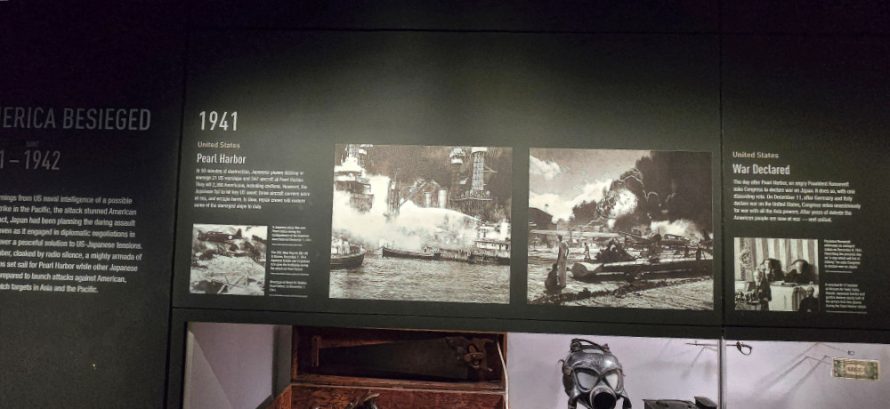
The Road to Berlin covers the European Theater from North Africa to the European continent, the D-day landings, Battle of the Bulge and the final victory in Berlin. Visitors learn about the battle to penetrate the Seigfried line, the air war, the taking of the German bridges which allowed entry into the heart of Germany along with the planning and the key players involved. As in the Road to Tokyo, there are the stories of those who fought in Europe along with memoirs and artifacts. These exhibits will stay in your memory for a long time.
The Liberation Pavilion
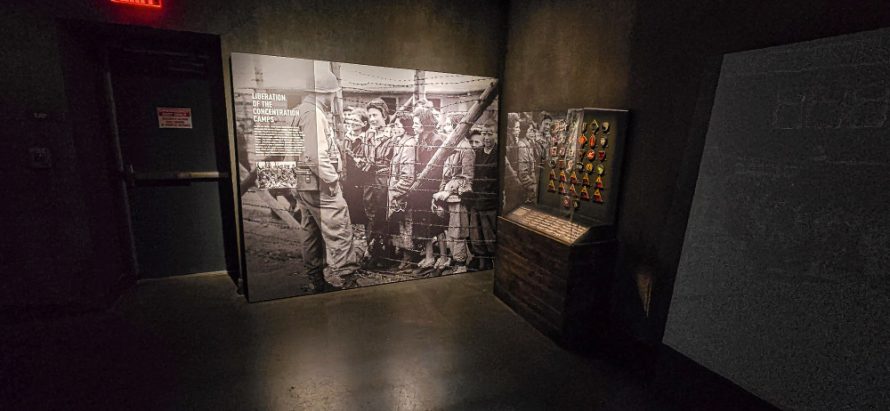
This is the most moving building. The Pavilion has three floors that explore the war’s closing chapters the Holocaust, the birth of the world and why democracy still needs defending. The first floor of the pavilion honor the sacrifices of the WWII generation with exhibits on the Holocaust, Anne Frank, faith in wartime, and the Monuments Men and Women. The Monuments Men, if you remember, was the special group of individuals tasked with finding and recovering the immense amount of art that the Nazi’s looted during the war. The second floor explores the war’s impact in the postwar period and its lasting legacies today, with exhibits like the war crimes trials and the emergence of the US as a world “superpower,”
Liberation Pavilion’s top floor holds the Priddy Family Foundation Freedom Theater, a multimedia show of what was at stake during World War II and the meaning of Allied victory.
U.S. Freedom Pavilion
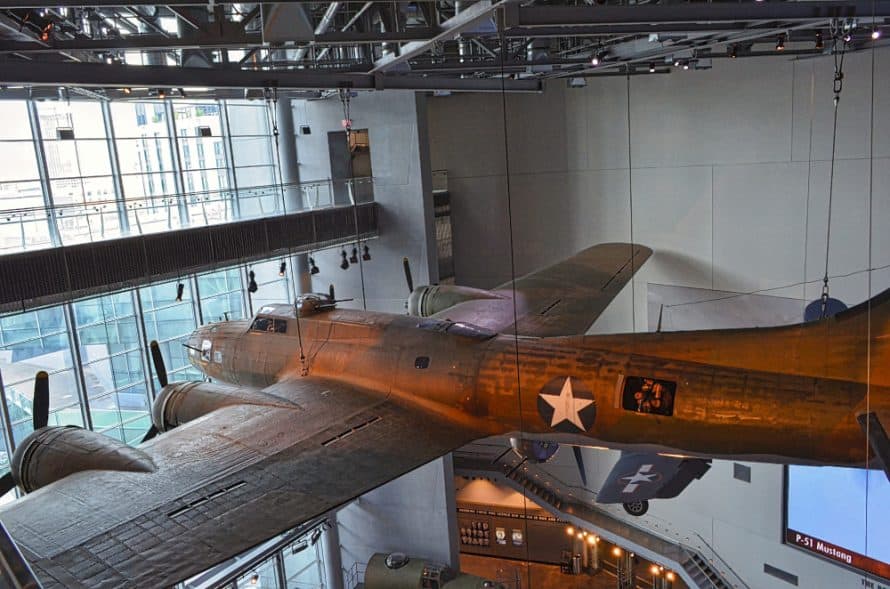
The Boeing Center has two exhibits. The George H.W. Bush Aviation Gallery showcases warbirds suspended from the ceiling in a 3-story setting. After walking on the ground floor where the vehicles are located, tanks jeeps and other equipment, you can look up at the impressive aircraft. You can also take the elevators to the second and third floor and get a better view of the aircraft. Bombers, Avengers and other warbirds are on display.
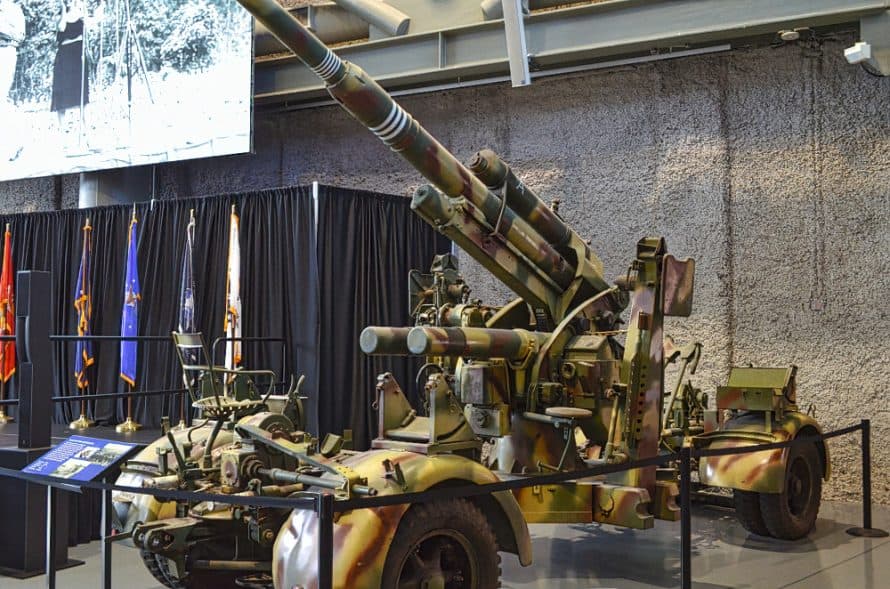
There is also the Final Mission: USS Tang Submarine simulator, the most successful submarine of the war, and relive the final battle. Twenty seven people can experience the simulator at once with each getting a “watch bill” representing a specific Tang crewmember. The experience is based on an actual battle and is intense.
Hall of Democracy
Hall of Democracy focuses on education and research. Hall of Democracy hosts STEM programs, traveling exhibits and the museum’s large digital archives. The Senator John Alario, Jr. Special Exhibition Hall covers over 3,700 sq ft of space and includes major exhibitions not covered in the other pavilions. There is also the Madlyn and Paul Hilliard Research library that holds personal memoirs, oral histories, unit histories, and classic WWII and military literature and is available by appointment only.
John E. Kushner Restoration Pavilion
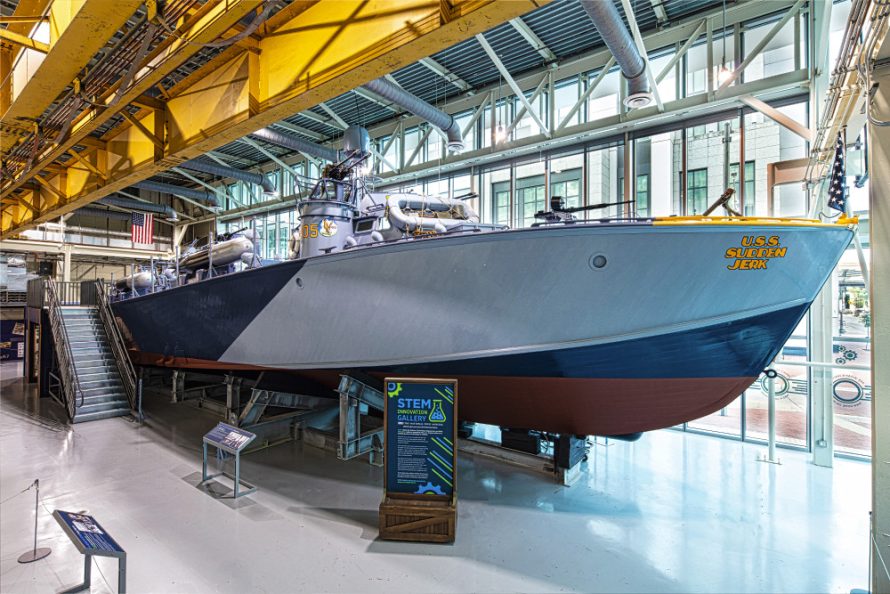
Photo credit to National WW2 Museum
Across the street from the Louisiana Memorial Pavillion is the John E. Kushner Restoration Pavilion. The star is the restored PT-305 patrol torpedo boat. This particular PT boat served in the European theater from 1944 to the end of the war. After working as a New York tour boat, an oyster boat, and a fishing charter, it was dry docked in 2007 when the museum obtained it. It took 10 years, 120,000 hours and over 3 million dollars to bring it back to life. There are plans to open it up for inside tours but when I visited you could only check it out from the outside. There is also a Dodge military ambulance and LTV-4, Landing Tracked Vehicle on display.
Additional Highlights
Founders Plaza for quiet reflection, Jeri Nims Soda Shop for malt shakes, and The American Sector restaurant for excellent victory-garden-to-table meals.
Planning Your Visit
Open daily 9:00 a.m.–5:00 p.m. Closed Mardi Gras Day, Thanksgiving, Christmas Eve, and Christmas Day.
You can check out hours of all the attractions and shows at this link
Tickets
There is varied pricing depending on a 1 day or 2 day pass, General admission, shows, military discounts and more. The best thing to do is check out pricing on their website. You can purchase tickets online or do what I did and purchase when I arrived.
Parking
I discovered that parking on the street works if you are lucky. You may have to walk a way to the museum. Personally, I would park in parking garage, more expensive but a much better option. The parking garage is located at the Higgins Hotel on Magazine Street across from the museum and costs $20 for 3-7 hours, $25 for 7-12 hours and $50 for 12-24 hours.
Best times to visit
Weekdays, especially Tuesday–Thursday mornings. Weekends and Mondays are busier. Avoid Mardi Gras season (late January–early March), spring break weeks, and the Christmas–New Year week (absolute peak crowds). The shoulder seasons are best. In October–November or March–April avoiding Mardi Gras.
Pro Tip
I have watched many visitors wander without a plan and miss the story flow. The smartest way to see the museum is to follow the route instead. I recommend you download the app to get oral histories.
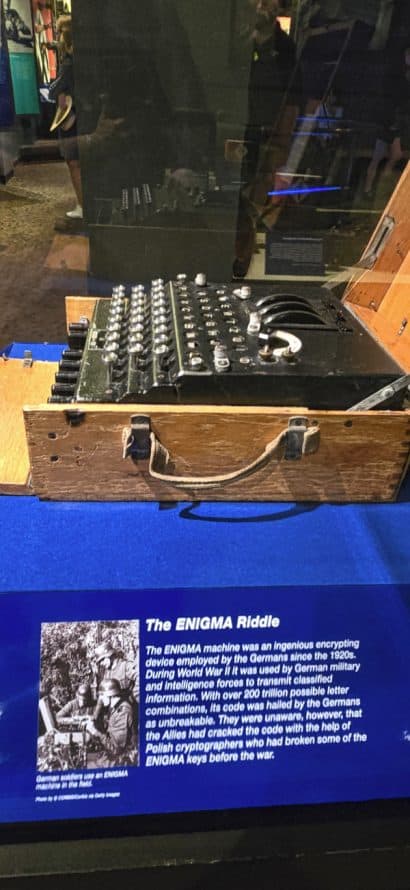
The National WW2 Museum does an excellent job in telling the story of the war. It is especially good for people who don’t know that much about the war. The history of how it started the various campaigns and the impact the war had on the entire world. The stories you read, told by those that were there cannot be taught in a classroom. I think anyone who has kids should make it a point to take them there so they know what happened and can experience it.
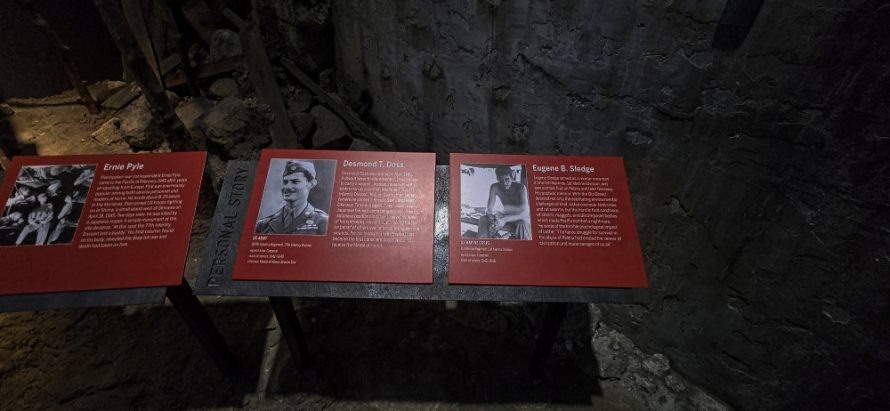
You do not just look at the history you walk through the history, a ruined village that looks bombed out the Ardennes forest during the Battle of the Bulge. Hear cold sounds and see falling snow. Enter the concrete of a bunker, on the Siegfried Line and feel the cold walls. The design follows an order. The design feels real.
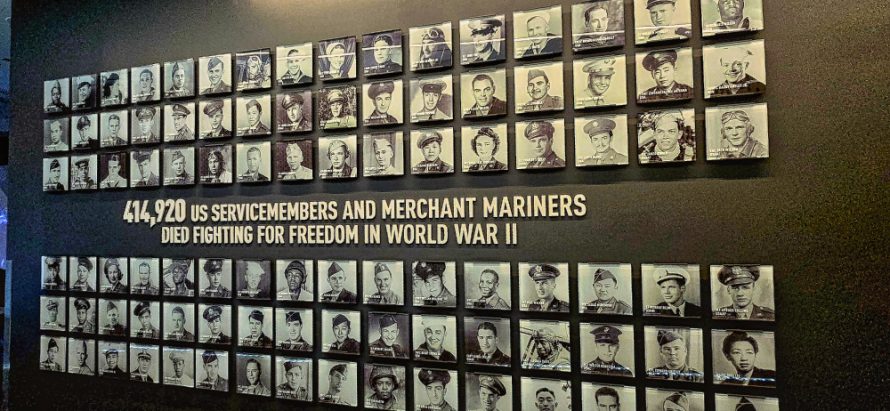
The National WWII Museum will bring history to life and leave you with gratitude, for the miracle of freedom. Visit New Orleans for Bourbon Street, the food and the music. However visit the National WW2 Museum to appreciate the sacrifices people made and why that generation is called “The Greatest Generation. You will never forget it.




Leave a Reply