Today we are going to discuss an illegal enterprise at a small town in Texas that has become a legend, involving politicians, lawmen, the media, and ordinary citizens from all walks of life. In the process it spawned a Broadway musical, a Hollywood movie and a classic rock song. So, stay tuned and we will be right back.
TRANSCRIPT
Welcome to the Traveling Fool Podcast, where we talk about travel destinations, the history and culture around those destinations, as well as travel tips and news. I’m your host, Bob Bales, and today we are going to discuss an illegal enterprise at a small town in Texas that has become a legend, involving politicians, lawmen, the media, and ordinary citizens from all walks of life. In the process it spawned a Broadway musical, a Hollywood movie and a classic rock song. So, stay tuned and we will be right back.
Before we get started please hit that like or subscribe button I would appreciate it. You can also head over to the website, Thetravellingfool.com and sign up for the monthly newsletter. It goes out once a month and it contains the latest in travel news and contests where you might be able to win a trip somewhere.
Our story starts in 1928 when a girl named Edna was born in Oklahoma. The 8th of 11 children. Times were tough having to live in the Dust Bowl and being part of a large family having to survive the Great Depression. The family moved around a lot trying to find work, moving frequently between Oklahoma, Texas and Arizona. Edna quit school in the 3rd or 4th grade and at 16 she was forced into an unwanted marriage. She wound up having a son who died shortly after birth and having endures an abusive marriage she left her husband.
Alone, homeless with no money or education, Edna did whatever she had to in order to survive. In this case it meant becoming a prostitute. Working in Forth Worth and then moving to Houston. Edna heard of an opportunity in a small town not far from Houston, where the girls were treated well and they made good money so in 1952 she decided to try and get a job there.
Now institutionalized prostitution had existed in this small Texas town since 1844, when a widow, named “Mrs. Swine,” brought three young women from New Orleans and settled in a small hotel near the saloon. She became the first madam and began a tradition of interaction and cooperation with the community and local lawmen that lasted almost 130 years. She and the women who worked for her carried on a lucrative business, using the hotel lobby for entertaining and a room upstairs for services.
That is until the Civil War, when she and one of her faithful prostitutes were run out of town labeled as Yankees and traitors. Now, after the war prostitution continued to operate in conjunction with the saloons and by the end of the nineteenth century, prostitution had moved out of the hotels and into a red-light district on the banks of the nearby Colorado River.
It was there that Miss Jessie Williams bought a small house soon after her arrival in town and she continued the custom set by her predecessors of good relations with the law and she ran what was considered a respectable house on the banks of the Colorado River. She hosted politicians and lawmen but excluded drunkards. Through her connections she learned of an impending crusade against the red-light district and bought two dwellings on eleven acres outside of the city limits and near the road to Houston.
In 1917 two sisters arrived at the house and were taken in and promoted to “middle-management” positions by Miss Jessie. They were put in charge of public relations and sent packages and letters to local boys fighting in World War I. One of the sisters eventually married an older, wealthy client and moved to San Antonio, where she became a respectable member of society. The other sister stayed in her middle-management position until her death. As the war ended and America entered the twenties, automobiles made the establishment accessible to many more customers. New prostitutes came and more rooms were built and new furniture added. The rooms were simply added onto the main house in a haphazard fashion as needed, a style that would continue until the closing of the place.
Now, Miss Jessie stayed on good terms with the sheriff Lossein, who visited every evening to pick up gossip and get information on criminals who had visited the whorehouse and bragged about their exploits. Many crimes in town were solved in this way. While the sheriff kept a tight grip on criminals, Miss Jessie ruled the house with a firm hand. Nothing exotic was allowed, and none of the bedroom doors had locks on them. Miss Jessie would walk the halls, and if she heard a customer giving one of her girls a hard time she would chase him out of the room and house with an iron rod.
As the Great Depression hit and the economy fell, Miss Jessie was forced to lower her prices. Though initially she still had plenty of clients, as times grew harder, customers were not so plentiful and the girls grew hungry. Miss Jessie therefore began the “poultry standard” of charging “one chicken for one screw.” Soon chickens were everywhere, and the establishment became known as the Chicken Ranch. Some of you may have heard of it.
The girls were never hungry. Miss Jessie supplemented the income by selling surplus chickens and eggs. The economy began to turn around as the Civilian Conservation Corps began construction of Camp Swift, a military cap, near the town of La Grange, and the shortage of men and money declined. The establishment used the same public-relations tactics as in the First World War, and the ranch began an economic recovery from the depression. As the war ended, due to health, Miss Jessie was confined to a wheelchair but still ruled the house with her iron rod. She did so into the 1950s, when she was confined to her bed and cared for by her longtime nurse. She spent her last few years with her wealthy sister in San Antonio and died in 1961 at the age of eighty.
So, let’s get back to Edna. Edna Milton arrived at the Chicken Ranch in 1952 at the age of twenty-three. She soon took over for Miss Jessie and proved just as capable and entrepreneurial. When she bought the ranch from Miss Jessie’s heirs for $30,000, she already had established herself as a competent madam. She had a good relationship with the new sheriff, a fellow named T. J. Flournoy, who had been elected in 1946, and he immediately installed a phone with a direct line to the Chicken Ranch, so he could replace the nightly visits of his predecessor with nightly calls. Edna also interacted with the community in the same ways Jessie had. She forbade any social contact between the girls and the residents of La Grange, she made sure the girls saw the doctor weekly and shopped with local merchants and that supplies were bought from local stores on a rotating basis. Edna also continued Jessie’s custom of giving money to local civic causes and became one of the town’s largest donors. The generosity of her donations points to the success of the ranch.
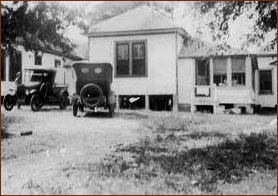
During the 1950s the ranch reached its sixteen-girl maximum. On some weekends there was a line at the door, made of students and soldiers from the nearby military bases. One base even supplied transportation via helicopter to the ranch. A visit to the Chicken Ranch also became part of freshman initiation at Texas A&M, which at that time was all male and a much smaller student population than today.
Cursing or drinking was not allowed of the men, or the women for that matter. Edna charged a quarter for the jukebox, seventy-five cents for cigarettes, and a dollar for a Coke, which was expensive for the times. The women asked for music and Cokes to promote business and add to the profits. The going rate for their services was fifteen dollars for fifteen minutes, though more expensive options were added in the sixties. A girl would have from five to twenty customers a day. After giving an estimated 75 percent to Edna, the prostitutes still made $300 a week and had no expenses. Edna took care of taxes, insurance, utilities, two meals a day, weekly doctor visits, two attendants, maids, a cook, and laundry bills.
Even before profits from the Cokes, cigarettes, and jukebox, it has been estimated that the Chicken Ranch had an income of more than $500,000 a year. All new employees were fingerprinted and photographed by the Sheriff before they could start work, and a criminal record of any kind prevented their employment. The Sherrif caught a few women wanted on warrants this way. Once they started working at the Ranch, the women had to follow the strict rules of Miss Edna.
The Chicken Ranch continued operating successfully until mid-1973. That year, consumer-affairs reporter Marvin Zindler from a Houston TV station ran a week-long exposé on the ranch. He claimed that his motive was inaction on the part of the Texas Department of Public Safety and local law officers to combat the organized crime and corruption allegedly evident at the ranch. Now Marvin Zindler said an anonymous tip led him to do the exposé. He would say in later years that actually the Attorney General, John Hill, that called and told him, he wanted to close the establishment but with all the politicians and prominent citizens that supported keeping it open he couldn’t. Hill felt that if Zindler ran an exposé on the place , with his bringing the story to light, the citizens of Texas would be outraged enough to force something to be done, and it was. All the attention drawn to the ranch forced the governor, Dolph Briscoe, to meet with the head of the DPS, the state attorney general, and Zindler. At the meeting it was disclosed that the DPS had run a two-month surveillance on the Chicken Ranch and had failed to find evidence of connection with organized crime. However, the pressure on the governor was such that he could not ignore the problem. He scheduled a meeting with Sheriff Jim Flournoy and ordered the house closed. The sheriff, along with some of the citizens of La Grange, saw little reason to close the ranch, but thought he had to do it anyway.
The Sherriff informed Edna of the situation, and by Wednesday morning of the week following Zindler’s exposé, August 1, 1973, the ranch was closed, and the women had left. Flournoy left for his meeting with the governor with a petition signed by nearly 3,000 people, but upon arriving he was informed that the governor had canceled the meeting when he heard the house was closed. Most of the ranch’s employees had headed for Austin or Houston; only Edna and a few maids were left. Edna attempted to buy a house in La Grange, but her down payment was returned. She subsequently got married and moved to an East Texas town.
Although the Chicken Ranch was officially closed, the story was not over. Customers showed up for more than two years looking for the place. A musical about the ranch, called The Best Little Whorehouse in Texas, was very successful. Edna had a silent role in the Broadway production, which was later turned into a movie of the same name starring Dolly Parton as the madame and Burt Reynolds as the Sherrif, Charles Durning as the Governor and Dom DeLuise as an investigative journalist that brings attention to the matter. Edna would later tell people she absolutely hated the movie. She would say “About the only accurate thing in the movie, was the fact that it was a whorehouse”. In 1973 the rock group ZZ Top released the song “LaGrange” with lyrics about the Chicken Ranch. They debuted the song for the first time at the Fayette County Fair where Lagrange is located.
Two lawyers from Houston bought the building and land and in 1977 moved part of the building, in its original condition, to Dallas to open a restaurant named the Chicken Ranch. It opened in September 1977 with Miss Edna as the hostess, the building and furniture in their original condition, and a menu of mainly chicken dishes. The restaurant closed a year later. The building and furniture were auctioned off at the site of the restaurant in late June of that year in a foreclosure sale. Sheriff Flournoy resigned in 1980, saying that he and his wife were sick of hearing about the Chicken Ranch and did not want to hear that name again. When he died in October of 1982, his funeral was attended by Lieutenant Governor Bill Hobby and nearly 100 lawmen. He was credited with solving every murder and bank robbery in Fayette County during his thirty-four-year term. The Chicken Ranch had helped his criminal investigations.
Edna later married Clayton Chadwell, who brought her to Phoenix, Arizona, where she lived in relative obscurity until her death in 2012 at the age of 84.
Today, Lagrange offers a lot for visitors. The Chicken Ranch is no longer there, but there is a lot of history and things to see and do in this small town about halfway between Houston and San Antonio.
The Fayette County Court House
Standing majestically in the heart of La Grange is the Fayette County Courthouse. Now I have talked in the past about Texas County Courthouses, and many people make it a point to visit them for their historic and architectural significance. The Courthouse in LaGrange, built in 1891 is a three-story Romanesque Revival structure with a clock tower. The sandstone structure features ornate detailing, impressive archways, and its distinctive clock tower, that has watched over the town for more than a century.
Monument Hill & Kreische Brewery State Historic Sites
Monument Hill serves as the final resting place for Texan soldiers who lost their lives during two significant 19th-century military expeditions: the Dawson Massacre and the ill-fated Mier Expedition.
Dawson Expedition
The Dawson expedition, was an incident in which 36 Texian militiamen were killed by Mexican soldiers on September 17, 1842 near the current city of San Antonio, Texas. The event occurred during the Battle of Salado Creek. Although Santa Anna, the ruler of Mexico, signed the Treaties of Velasco, which ceded the Texas territory from Mexican control, the treaty was never ratified by the Mexican Government. Santa Anna repudiated the treaty once he was released from Texan custody. So, for the Mexicans, the incursion it was to prove they could return to Texas at will.
On September 11, 1842, a Mexican force of 1,600 entered San Antonio and took control of the town, with minimal resistance from the Texans. When the news of the fall of San Antonio reached Gonzales, Mathew Caldwell formed a militia of 210 men and marched toward San Antonio. On September 17, Caldwell sent a small band of rangers to draw the Mexicans toward the battlefield he had chosen. At least 1,000 Mexican soldiers moved out of San Antonio to attack the Texans. A separate company of 54 Texans, mostly from Fayette County, under the command of Nicholas Dawson, arrived at the battlefield and began advancing on the rear of the Mexican Army. The Mexican commander, General Adrián Woll, afraid of being surrounded, sent 500 of his cavalry soldiers and two cannons to attack the group. The Texans were able to hold their own against the Mexican muskets, but once the cannons got within range, their fatalities mounted quickly. Dawson realized the situation was hopeless and raised a white flag of surrender.
However the battlefield is a hectic place and with the fog of war, both sides continued to fire and Dawson was killed. The battle was over in a little more than one hour. It ended with 36 Texans dead, fifteen captured and two escaped. At the front, Caldwell’s men had repelled the Mexican attacks and inflicted heavy casualties. Woll was forced to retreat to San Antonio and then back towards the Rio Grande and Mexico.
The Mier Expedition
Now the Mier expedition was a military operation launched in November 1842 by a Texian militia against Mexican border settlements. It included a major battle at Ciudad Mier, across the border in South Texas, on December 26 and 27, 1842, which the Mexicans won. The expedition is best known for the Black Bean Episode, in which the Mexican Army selected for execution one in ten prisoners by drawing beans from a pot. To help determine who would die, The Mexican Commander Huerta had 159 white beans and 17 black beans placed in a pot. In what came to be known as the Black Bean Episode or the Bean Lottery, the Texans were blindfolded and ordered to draw beans. Officers and enlisted men, in alphabetical order, were ordered to draw. The seventeen men who drew black beans were allowed to write letters home before being executed by firing squad.
In 1847, during the Mexican–American War, the U.S. Army occupied northeastern Mexico and Captain John E. Dusenbury, who was a white bean survivor of the Mier Expedition, returned to site of the execution and exhumed the remains of his comrades. He traveled with the remains on a ship to Galveston, and then by wagon to La Grange.
The citizens of La Grange retrieved the remains of the men killed in the Dawson Massacre from their burial site near Salado Creek. The remains of both groups of men were reinterred in a ceremony attended by over 1,000 people. They were buried in a large common tomb in 1848, in a cement vault on a bluff which was one mile south of La Grange. The grave site is now part of a state park, the Monument Hill and Kreische Brewery State Historic Sites.
Kreische Brewery
In 1849, German immigrant Heinrich Ludwig Kreische purchased 172 acres of land including the Dawson/Mier tomb, now known as Monument Hill State Historic Site. Kreische was a Master stonemason and he built a three-story house for his family. In the 1860s, he utilized the spring water from the below his house and started one of the first commercial breweries in Texas. By 1879, the brewery was the third largest in the state. Kreische’s Bluff Beer, as it was named, was a favorite with locals. Kreische Brewery closed in 1884, two years after the death of its owner. The brewery struggled due to the rise of large-scale brewing, commercial refrigeration, and railroads, and Kreische’s death was the final blow to the business.
Today visitors can enjoy Self-guided tours of the brewery ruins. Access to the Kreische family home (a well-preserved example of German architecture) Interpretive displays explaining brewing techniques of the era. The combined site offers hiking trails that connect these historical features through beautiful natural surroundings, making it perfect for history buffs and outdoor enthusiasts alike.
Old Fayette County Jail
The Old Fayette County Jail, constructed in 1883, stands as an imposing reminder of frontier justice. The Victorian Gothic stone building had operated as the county jail until 1985, making it one of Texas’ longest-serving detention facilities. Today, visitors can tour the jail cells, sheriff’s quarters, and gallows area while learning about law enforcement in early Texas.
Texas Heros Museum
Located inside the old jail is also the Texas Heros Museum, a tribute to the men and women who sacrificed to create the great state of Texas. It is also the home of the Bob Lain Memorial Library. Bob was a Texas Hero who lost his legs in Vietnam. His collection of over 800 books on military history are the nucleus of an ever-growing reference library. The Texas Heroes Museum honors Texans, from Moses Austin and “The Old 300,” to modern day heroes.
The Faison House
Just a short walk away, the historic Faison House. The house offers a different perspective on La Grange’s past. Built in 1881, the Victorian home belonged to Thomas Faison, a prominent local businessman. The house exemplifies the prosperity that came to La Grange during the late 19th century, with its ornate woodwork, period furnishings, and manicured gardens.
Currently operated as a museum by the La Grange Heritage Association, the Faison House presents a vivid picture of upper-middle-class life in Victorian-era Texas. Seasonal tours allow visitors to experience the lifestyle of La Grange’s founding families, complete with original artifacts and furnishings.
MKT Railroad Depot & Museum
Built in 1898 the old train depot has been a museum since 1999 and houses artifacts and collections from the time it was part of the Missouri Kansas Texas railroad. There are also 2 cabooses located at the depot.
The Texas Czech Heritage and Cultural Center
Texas had a lot of Czech immigrants and the Texas Czech Heritage and Cultural Center, located at the fairgrounds tells the story of early Czech immigration. There is a museum with a huge collection of items, the Czech Village with several historic buildings that hold the Czech Newspaper Museum, The Music Museum, General store, and much more. It is a great place to spend time and learn about early Texas History and the Czech immigrants.
Historic Casino Hall and Local Art Galleries
Near the Fayette County Courthouse you can visit Historic Casino Hall. Despite its name, Casino Hall was never a gambling establishment but rather a community gathering place built in 1881. After extensive restoration, this historic building now serves as a cultural hub hosting art exhibitions, concerts, and community events.
The Jersey Barnyard Experience
The Jersey Barnyard stands out as a genuine family-owned dairy farm where visitors connect with agriculture through hands-on experiences. This working farm welcomes families without reservations and offers both guided and self-guided tour options throughout the week.
On the guided tour ($14.50 for adults, $10 for children 2-12), visitors can feed and pet barnyard animals including goats, chickens, ducks, and rabbits. Bottle feed Jersey calves, take a tractor-drawn hayride to see the dairy operation or, try hand-milking a cow.
Kolaches at Weikel’s Bakery
Weikel’s Bakery stands as a must-visit destination for authentic Czech pastries. Their award-winning kolaches have earned well-deserved fame throughout the region.
Rohan Meadery
Just outside town, Rohan Meadery introduces visitors to the ancient art of honey wine production. This family-owned establishment earns excellent reviews (4.6/5) for both its products and atmosphere. Guests can participate in educational tastings where staff members like Kelly share fascinating stories about the farm and its unique beverages. Beyond mead, they offer craft ciders and even pizza, creating an ideal setting for relaxation after exploring La Grange. The meadery operates as part of Blissful Folly Farm, where sustainable methods produce these artisanal beverages.
Bugle Boy
Bugle Boy offers an 80 seat, cozy venue where everyone is there for one reason only…to listen to and enjoy great music. housed within World War II army barracks. This extraordinary venue features a dedicated listening room where talking isn’t permitted, allowing performers to command complete audience attention. Operating for over 20 years, The Bugle Boy hosts approximately 90 performances annually, primarily Friday through Sunday.
LeGrange is just a great little town. It’s got several shops scattered throughout town, and they offer everything from vintage furniture to collectibles, making it an ideal town for treasure hunters seeking one-of-a-kind pieces. It’s not too far from Round Rock, where and not Round Rock, Roundtop, Texas, where Roundtop is famous in Texas for their flea market. I mean, it’s massive, but people from all over attend that place. It’s not too far from Roundtop.
Kruschel Park, it provides a little peaceful retreat, well-maintained walking trails, picnic areas and playgrounds. It’s just right on the outskirts of town. The Colorado River adds another whole dimension to Le Grange’s outdoor recreation center or recreation scene. At Plum Park, which is located on a scenic stretch of the river, you can find forty acres of sandy beaches, perfect for launching canoes and kayaks. And the park offers picnic tables, grills, and campsites for those wishing to attend or extend their stay. LaGrange is just a great town for visiting the outdoors.
They also have a lot of great places to eat. I mean, you can find those little country cafes that people bypass all the time, but they’ve been there forty, fifty years for a reason. I tell you, I had a great time. It’s not that far from where I live, like two, a couple hour drive. But it’s halfway between Houston and San Antonio, just off of not too far off of Interstate 10. If you go, you might want to make it the weekend. You know, spend some time outdoors, visit all the local areas, learn all about the history there. It’s just a really, really cool place with a really unique history.
And what started out as a place with a house of ill repute, where everybody knew it, and it was open secret, I guess you could say. Nobody did anything about it, but everybody’s known about that place in Texas for years. Well, that’s not there anymore, but there’s still good reason to go visit the town. Well, that’s it for this week. I hope you enjoyed the podcast. Do me a favor, hit that like or subscribe button, and we’ll be back next week with another episode of the Traveling Fool. So until then, safe travels.
Please subscribe and leave a review on I-Tunes.
You can sign up for my email list
Follow me on social media





Leave a Reply