From a small Texas town to one of the most important military leaders in history. In this podcast we explore the amazing life and legacy of a true giant.
TRANSCRIPT
Hi and welcome to The Traveling Fool, the show where we talk about travel destinations, the history and culture around those destinations, along with travel tips and news. I’m your host, Bob Bales, and today we’re gonna talk about a kid that grew up in the Texas Hill Country, and he grew up to be one of the greatest military leaders of all time. So stay tuned, and we’ll be right back.
Growing Up In A Hotel World
Hi and welcome back. Now, born in 1885 in the Texas Hill Country, Chester’s father had died shortly after his birth, and he was raised primarily by his mother and grandparents. His grandfather, who had immigrated from Germany, had arrived in Texas sometime in the mid eighteen forties and opened a hotel serving travelers, local residents, and even the occasional politician. His grandfather would later grow on to become a Texas ranger and serve in the Texas State Legislature. But as far as Chester, well he earned the nickname Cotton Head, or sometimes Cotton, for his light blonde hair, and he spent his early childhood at his grandfather’s hotel, where the old man would tell him tales of the time he spent as a merchant seaman in Germany, and tales of the sea. Cotton would later say that his grandfather was the most important influence in his life. Later, Cotton and his mother Anna would move to Kerville, Texas, where she would remarry and their household helped operate the St. Charles Hotel. Cotton would become the chief handyman at the hotel in his latter teen years. Then in high school, Cotton was such a fast learner that the principal would later say that he had a hard time keeping up with him, and he had to keep him busy with additional schoolwork.
Winning A Naval Academy Slot
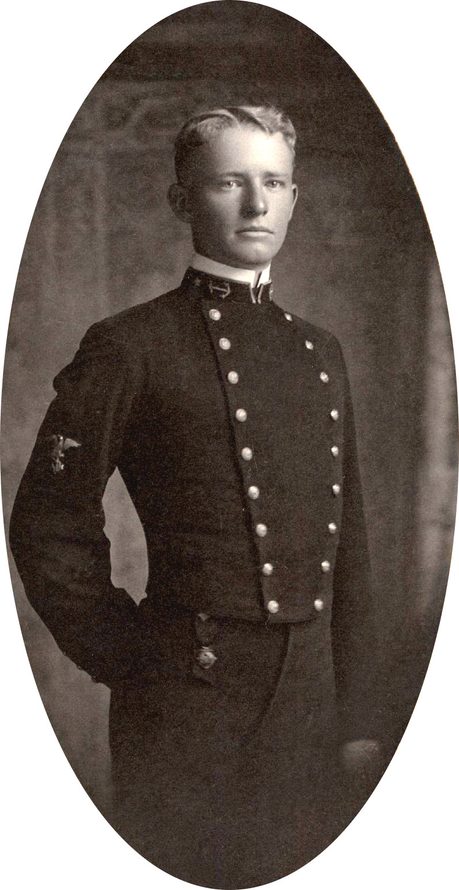
Yeah, Chester was smart, and he wanted to further his education after high school. He felt his best opportunity to do so would be to get an appointment to the US Military Academy at West Point. So he contacted his U. S. representative in order to do so. Unfortunately, there were no appointments left for West Point to be awarded. However, the representative told him that he did have one left for the Naval Academy, and he would award it to the best student after a competitive exam. So Chester studied real hard and came out on top. Now shortly before his sixteenth birthday, Chester won this competition. He left high school prior to graduating high school and entered Annapolis at the age of sixteen in nineteen oh one. So this was a while back, and you could do things like that. They would wave things and it would be kind of unheard of to join West Point or Annapolis today at the age of sixteen without a high school diploma. But you could do it in nineteen oh one. And Chester did well at the Academy. He graduated seventh in his class and in nineteen oh five he joined the crew of the USS Ohio, a battleship in San Francisco that was sailing to the Far East. He would later be transferred to a cruiser before taking command of a gumboat at China Station. As an ensign, he then took command of a destroyer, where in nineteen oh eight he promptly ran into the ground in the Philippines and was court martialed.
Mistakes At Sea And Submarines
Only thing that saved his career was the calm way in which he had handled himself after the incident. After his court martial, he was transferred to submarine duty. They figured he’d be better off if he went under the water instead of trying to beach all the ships they had. He excelled in submarine duty and he would become one of the Navy’s premier experts on undersea warfare in these early stages of submarine. Now what followed was assignments to learn about diesel engines for ships and supervising the building of new ships until World War I came about when he became chief of staff to the commander of Atlantic Submarine Forces. In 1920, he was sent to Hawaii to oversee the construction of Pearl Harbor Submarine Base, and in 1926 he was appointed to the US Berkeley, where he became one of the first Navy ROTC units, the Reserve Officer Training Corps. Now by this time, Cotton, the little Texas Hill Country boy, had found a home in the Navy and he was doing pretty good. In nineteen thirty-eight, Cotton, also known as Chester William Nimitz, was promoted to Rear Admiral and became chief of the Bureau of Navigation, which handled personnel administration and officer assignments for the US Navy.
Pearl Harbor And Roosevelt’s Choice
And then came the attack on Pearl Harbor on December seventh, nineteen forty-one. Now, while it wasn’t entirely his fault, there were delayed communications and other factors, and Admiral Kimmel, the commander of the Pacific Fleet, was not prepared for the attack on Pearl Harbor. And he could have done things way in advance to ensure all the Navy ships and planes were not all bunched up together in one place. President Roosevelt relieved Kimmel of command due to several factors, and with moral or morale being at a low point, he needed someone to replace him. President Roosevelt personally chose Nimitz and promoted him from rear admiral to admiral, skipping one grade vice admiral, and promoting him ahead of senior officers who had more experience in time in the Navy. He needed a man that could stay calm under pressure, had a strong technical background, and could restore morale. Roosevelt knew that Nimitz from his time being stationed in Washington and felt that he was the right man for the job. So ten days after the attack on Pearl Harbor, newly promoted Admiral Chester Nimitz, commander of the Pacific Fleet, was named and he told him to get to Hawaii and stay there until the war is won.
Commanding The Pacific War Machine
In nineteen forty-two, Nimitz was named Supreme Commander of joint Allied Air, Land and Sea Forces across the Pacific Theater, including MacArthur’s Southwest Pacific sector. At the height of the war, he commanded over two million military and civilian personnel, along with roughly 5,000 ships and 20,000 planes. From December 1941 to November 1945, Nemitz presided over eight major naval battles, including battles of the Coral Sea, Midway, Guadalcanal, Iwo Jima, and the Ley Gulf, and signed as a representative of the United States when Japan surrendered in Tokyo Bay. Now after the war, Nemitz would go on to serve as Chief of Naval Operations, retiring in December nineteen forty-seven with the rank of Fleet Admiral after forty two years of active duty. Since Fleet Admiral is a lifetime appointment, he technically remained on active duty with full pay and benefits for the rest of his life. He retired in California where he became a regent at the University of California, and he died at home in February nineteen sixty six after suffering a stroke and some other medical complications.
Retirement And A Lasting Legacy
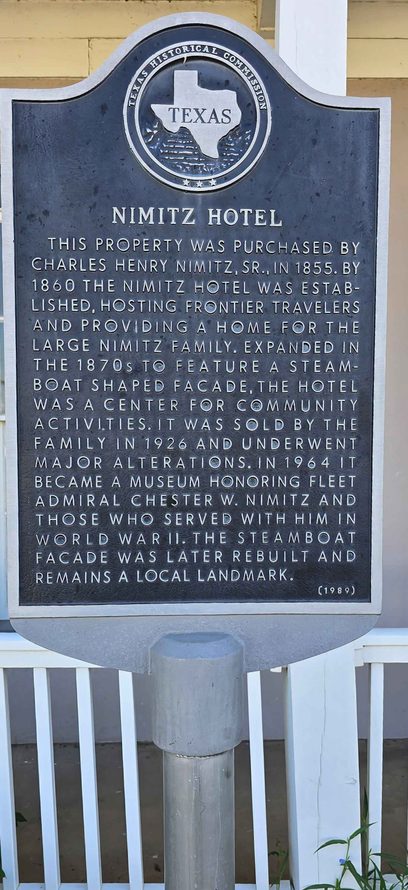
He’s buried at Golden Gate National Cemetery just south of San Francisco. In nineteen sixty four, a citizens group was founded and named the Admiral Nimitz Foundation in honor of their native son. And in nineteen sixty-seven, a museum was officially opened in the Nimitz Hotel on Main Street in Fredericksburg, Texas, named the Chester Nimitz Memorial Naval Museum, honoring his life and his legacy. The same hotel where Cottonhead’s grandfather opened and where he used to tell the young boy of tales of the sea long ago. Now in the year two thousand the museum was expanded and renamed the National Museum of the Pacific War, telling the story of World War II in the Pacific Theater of Operations.
Inside The National Museum Expansion
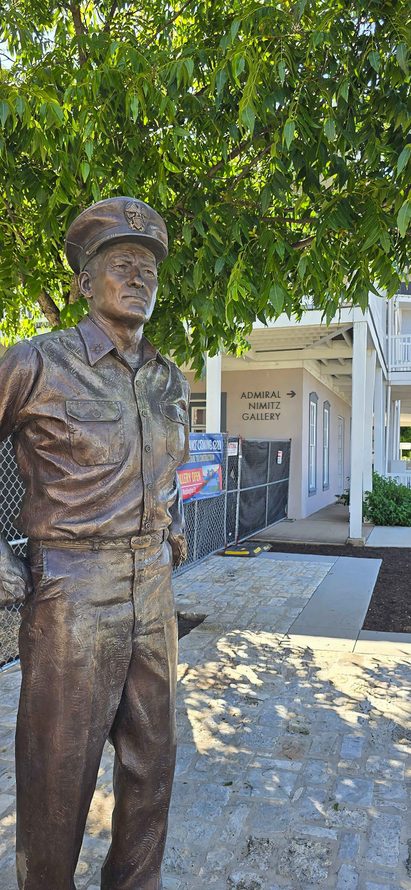
I’ve always enjoyed visiting military museums, battlefields, cemeteries, all that stuff. And I’ve been to many places all over the world. I’ve visited museums and locations in Europe, Asia, and of course the US. The first time I visited this museum was many, many years ago when it was still called the Nimitz Museum. And it was pretty interesting then. But I recently visited again, and I have to say they’ve done a really good job of telling the story not only of Admiral Nimitz, but of the war in the Pacific. Now in the late 1880s, Chester’s grandfather expanded the Nimitz Hotel, adding a distinct three story frame section with a steamboat facade, obviously reminiscent about his days as a captain aboard the merchant marine vessels in Germany. Now how fitting that the original Admiral Nimitz Museum be housed not only in his family’s hotel, but one that has a nautical theme. It’s from the original hotel term museum that has evolved into the current museum, which comprises six acres of buildings, galleries, and exhibits.
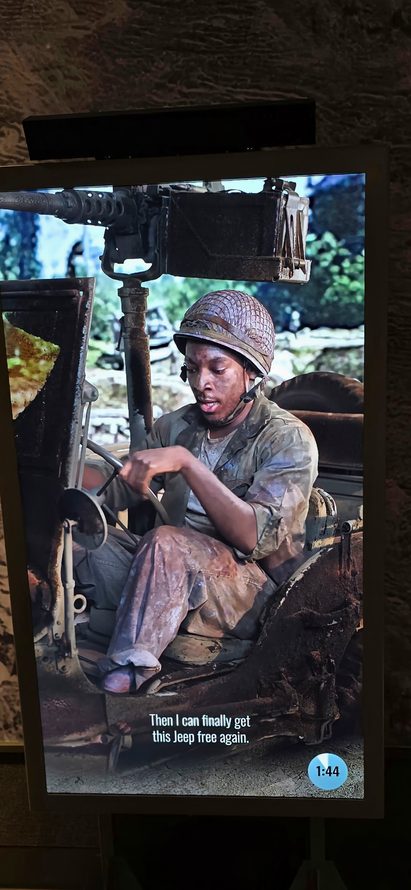
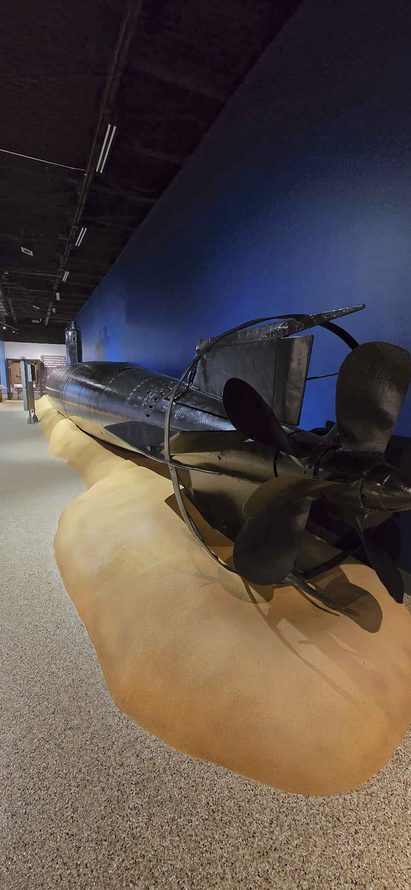
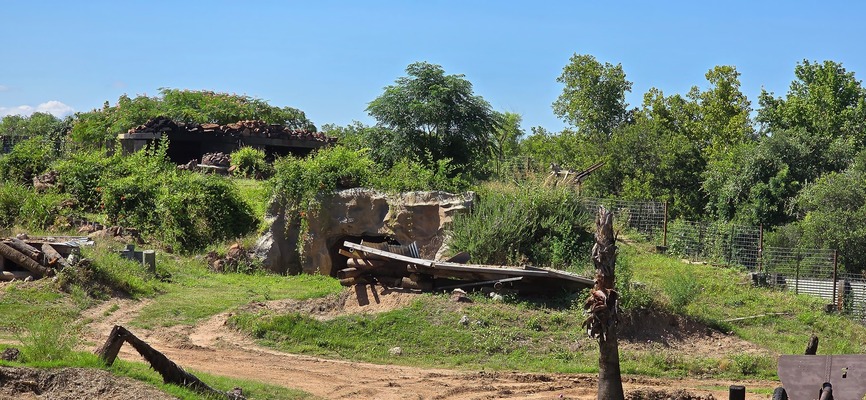
There are over fifty five thousand square feet of exhibit area to include the main George HW Bush Gallery and the Admiral Nimitz Gallery. There’s also an outdoor area called the Pacific Combat Zone, which hosts living history demonstrations and battle reenactments, along with two buildings that house a restored PT boat and aviation exhibits. Now there’s a lot of great exhibits at the museum, including videos that and this I’d seen this before and a couple of others, but they use AI to tell the experience of real people, and although I’m not a huge fan of AI, it’s done really, really well, and it really brings those stories to life. There are also a lot of artifacts, immersive experiences, and unique artifacts such as the 78-foot Japanese HA-19 midget submarine that ran aground during the attack on Pearl Harbor. They have it on display there. Now, if you’re a fan of military museums or like learning about history, then this is one museum that you really should visit.
Must See Exhibits And AI Stories
General admission includes access to the submarine exhibit, the Admiral Nimitz Gallery, the Pacific Combat Zone exhibits. They do have something called the Rescue. It’s an immersive experience about a real event that occurred, and it’s not included and it requires a separate add-on ticket. But children under nine are free, and tickets range from twelve dollars for students up to twenty-six for adults. And they have discounts for the seniors and military folks. The rescue is a multi-sensory immersive experience and it brings a true World War II rescue mission to life. Children under nine are free for that, and everyone else is twelve dollars. Those tickets are very limited.
Tickets Hours And Visit Strategy
Now, the museum is open from 9 a.m. to 5 p.m. Wednesday through Monday. It’s closed on Tuesday with the combat or the outdoor combat zone closing at 3 p.m. on every day. I would recommend you arrive early so you can take time to really experience everything. And if you plan on visiting on the weekend, buy your tickets online. I went, it was on a Wednesday, and I arrived at like 9 a.m., something like that. By 10 a.m. there were at least 100 or 150 people there. So it it people started showing up pretty quick, but it wasn’t crowded. Now I can only imagine what that’s like on the weekends because Fredericksburg gets crazy on the weekends. People show up from all over the place.
Fredericksburg Plans For Next Time
Now Fredericksburg and the surrounding area have a lot to offer other than the National Museum of the Pacific War. And in the next episode, I’ll tell you more about some of the other great things to see and do in the area, including an old trading post from the 1880s that’s turned the place into a Texas pilgrimage site.
Closing Thanks And Subscribe Request
So, thanks for tuning in. Please hit that like or subscribe button. I’d really appreciate it. If you know someone that might like the podcast, send them a link to it. And until next time, save travels.
Please subscribe and leave a review on I-Tunes.
You can sign up for my email list
Follow me on social media





Leave a Reply